
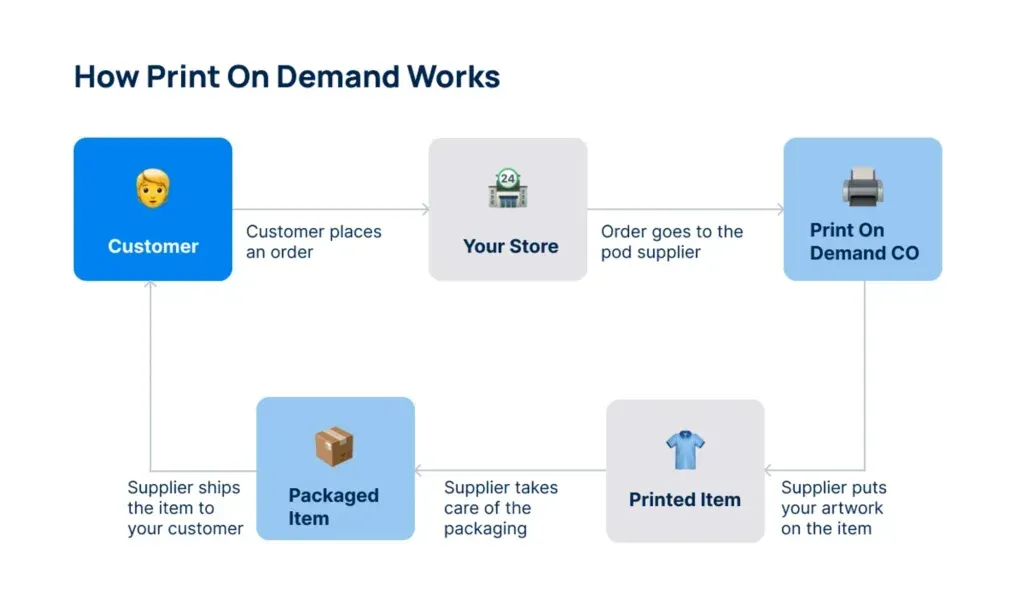
Automated workflows for print on demand are transforming how merchants run their businesses, delivering faster turnarounds, precision in customization, and reliable results that meet rising customer expectations. By coordinating order intake, artwork checks, production scheduling, and fulfillment into one cohesive flow, these systems remove the bottlenecks that slow teams during peak seasons and empower operators to invest time in design, testing, and strategic growth rather than repetitive data entry. This is where print on demand automation comes into play, linking storefronts with production queues, printers, and logistics providers so information travels automatically, decisions are rule driven, and human intervention is reserved for exceptions. The result is improved accuracy across channels such as Shopify, Etsy, and WooCommerce, with standardized color management, versioned proofs, and consistent output that scales without sacrificing quality. With automation handling key tasks from routing orders to the right print partners, validating files against printer specs, applying color profiles, generating print ready files, and notifying customers with tracking updates, you can maintain speed and quality at scale.
Viewed through an alternative lens, the same concept becomes a holistic POD orchestration, where data, assets, and production are harmonized in a single auditable pipeline. Think of these processes as a data driven engine that routes orders by product type and geography, validates inputs, coordinates with printers, packaging, and carriers, and minimizes manual handoffs. This framing highlights governance, scalability, and predictability attributes essential for expanding SKUs, managing multiple storefronts, and meeting global fulfillment requirements. Focusing on integrations, data standards, and rule based decisioning allows operators to monitor performance, pinpoint bottlenecks, and drive continuous improvement without sacrificing customer experience. If you are evaluating automation, start with a small well defined pilot, measure outcomes such as time saved and error reductions, and then extend the approach across channels and products as confidence grows. Embracing this mindset helps teams design resilient processes that adapt to new platforms and markets while keeping the customer at the center.
1) Automated workflows for print on demand: Accelerating speed, accuracy, and growth
Automated workflows for print on demand are reshaping how merchants operate by connecting orders, production, and fulfillment into a seamless sequence. This orchestration minimizes manual touchpoints and reduces the friction that slows speed to market. In a landscape where customers expect quick turnarounds and personalized products, automation helps you deliver consistent quality at scale with less effort.
By leveraging print on demand automation, you can streamline the entire order journey—from intake to shipping—while maintaining control over design integrity and color accuracy. Embracing automated POD processes means fewer human errors, faster turnarounds, and the ability to publish more designs across more channels. It also aligns with the goal of saving time with print on demand, freeing up creative and marketing teams to focus on growth rather than repetitive data entry.
2) Core components of POD automation: data ingestion, design readiness, and production orchestration
A successful POD automation strategy starts with data ingestion and channel integration. Automated systems pull orders from Shopify, Etsy, WooCommerce, and marketplaces, normalizing customer data, SKUs, and product variants so production can begin without manual re-entry. This data layer is the backbone that prevents misprints and mis-shipments as you scale the business.
Next comes design readiness and production orchestration. Automated workflows verify artwork against printer requirements, apply color profiles, and route jobs to the most suitable partner. This orchestration ensures every order is prepared with consistent settings, enabling a scalable approach to printing that supports a growing catalog of designs and SKUs without sacrificing quality.
3) Quality assurance through automated proofs, approvals, and version control
Automated proofs play a pivotal role in maintaining brand standards. By generating proofs for review and enforcing version control, POD workflows reduce the chance of late-stage changes that derail production. A well-implemented proofing process keeps stakeholders aligned and helps prevent costly reprints.
When complex designs arise or customer-provided assets require customization, automated approvals ensure changes stay within brand guidelines. This blend of automation with human-in-the-loop checks preserves quality while still delivering the speed and reliability that customers expect from automated POD processes.
4) Streamlining fulfillment: packaging, labeling, and carrier integration
Fulfillment, packaging, and shipping are where automation translates to real-world savings. Automated workflows manage SKU-specific packaging, generate labels, and coordinate with carriers, ensuring that orders leave the warehouse with consistent presentation. Tracking updates are pushed back to storefronts and customers, closing the loop on the order journey.
For international orders, automation can handle duties, taxes, and customs documentation, simplifying cross-border fulfillment. This capability helps scale the business globally by reducing delays and enhancing customer satisfaction, while keeping packaging and labeling aligned with brand standards.
5) Multi-channel integration and the role of POD workflow automation in scaling
A multi-channel strategy benefits greatly from robust data mapping and cross-channel interoperability. Automated POD systems ingest orders from various storefronts, translate variants, and route them to the correct production queues. This reduces manual reconciliation and ensures consistent output across channels as you scale the business.
As you expand, automation supports consistent color management, standardized proofs, and centralized analytics. This makes it easier to scale print on demand business operations without a linear increase in labor, and it reinforces the reliability customers expect when buying from multiple sales channels.
6) Practical path to implementation: pilots, guardrails, and ROI measurement
A practical implementation begins with a focused pilot that automates the most time-consuming steps, then measures impact across key metrics. Define non-negotiables like order accuracy, color consistency, and on-time delivery, which become guardrails for the automation. This approach helps you validate assumptions before broader rollout.
To justify the investment, track time saved, reductions in error rates, throughput improvements, and customer satisfaction. As you scale, you can bring in more channels, products, and fulfillment options, building toward a fully automated POD workflow that supports a scalable, resilient business.
Frequently Asked Questions
What are Automated workflows for print on demand and how can they save time with print on demand?
Automated workflows for print on demand connect your storefront with production, automating order routing, file prep, color management, and fulfillment. This reduces manual data entry, lowers the chance of errors, and speeds up turnaround, helping you save time with print on demand. You can still introduce human checks where needed to handle edge cases.
How does POD workflow automation improve accuracy and scalability for a growing POD business?
POD workflow automation minimizes manual data handling and standardizes color profiles, proofs, and production routing. This leads to higher accuracy and consistent output as order volume grows, allowing you to scale without a proportional jump in labor. It also provides better visibility into status and capacity across channels.
What are the core components of automated POD processes?
Core components of automated POD processes include data ingestion and channel integration, design readiness and file prep, production orchestration, proofing and approvals, packaging and fulfillment, and post-fulfillment communication. Together, these elements ensure data, files, and instructions flow automatically from order to delivery.
What features should I look for when evaluating print on demand automation tools?
Look for multi-channel order ingestion and robust data mapping, automated file validation and color management, production scheduling and queue management, proofing workflows with version control, and seamless integrations with printers, packaging, and carriers. Also prioritize comprehensive reporting to quantify time saved and performance gains.
How can automated workflows help scale a print on demand business across multiple sales channels?
Automated workflows help scale your print on demand business by unifying orders from channels like Shopify, Etsy, and WooCommerce into a single data model, routing them to the right printer, applying templates, and automating proofs and tracking updates. This reduces manual touchpoints, speeds fulfillment, and maintains consistent quality across channels.
Can you share a practical ROI example of implementing automated workflows for print on demand?
A practical ROI example: if a store processes 500 orders per month with a manual workflow averaging 6 minutes per order plus 2 minutes for error checks, automation that reduces manual handling by 60% could free about 50 hours per month. Over a year, that’s roughly 600 hours reclaimed for product development, marketing, or support, illustrating meaningful cost savings and growth potential.
| Key Point | Summary |
|---|---|
| What automated POD workflows do | Connect storefronts with production files, printers, and logistics so data moves automatically when triggers occur, reducing manual data entry and errors across the order-to-fulfillment journey. |
| Core components | Data ingestion, design/file readiness, production orchestration, proofing and approvals, packaging and fulfillment, and post-fulfillment communication. |
| Data ingestion and channel integration | Pull orders from all sales channels, normalize data (customer, address, product variant, quantity), map SKUs, translate variants into print-ready specs, and reduce mismatches. |
| Design readiness and file prep | Verify artwork meets printer requirements, apply color profiles, generate print-ready PDFs, resize assets, and flag files for human review when needed. |
| Production orchestration | Route orders to the right printer/partner, select facilities based on location/capacity/cost, queue with exact settings, and track status and due dates. |
| Proofing and approvals | Generate proofs, route for approvals, enforce version control, and trigger design reviews for customized items. |
| Fulfillment, packaging, and shipping | Handle packaging, labels, carrier coordination, push tracking numbers to storefronts and customers, and manage duties/taxes for international orders. |
| Post-fulfillment communication | Send confirmations, shipping notices, delivery estimates, and post-purchase requests for reviews to build trust. |
| Implementation approach | Map the current order path, identify bottlenecks, select tools, run a pilot, measure impact, and scale gradually. |
| ROI example | Example: 500 orders/month, 6 minutes per order plus 2 minutes for error checks (4,000 minutes/month). Automation reduces manual handling by 60% and errors by 50%, saving about 50 hours/month (600 hours/year). |
| Tool evaluation factors | Multi-channel ingestion, robust data mapping, automated file validation and color management, production scheduling, proofing with version control, printer/carrier integrations, and analytics. |
| Quality control | Automation reduces errors but requires quality checkpoints and human review for edge cases or high-value SKUs. |
| Hybrid approach | Automate routing while keeping complex or high-margin items under manual review to maintain quality and efficiency. |
| Overall outcome | Time savings, improved accuracy, scalability, more design capacity, and faster go-to-market with broader product ranges. |
Summary
Automated workflows for print on demand are transforming how POD businesses operate, delivering faster fulfillment, improved accuracy, and scalable growth. By linking orders to production, validating files, and automating key steps, these systems reduce manual effort and minimize errors across channels. They enable handling high volumes without a linear rise in labor, while preserving quality through standardized color management and proofs. Start with a focused pilot, map the current order path, and gradually scale automation across platforms, products, and fulfillment options to realize measurable time and cost savings. With thoughtful governance and human-in-the-loop checkpoints, automated POD workflows support a faster, more reliable, and customer-centric print-on-demand operation.