
DIY vs professional patches presents brands with a crucial choice about control, cost, and creativity. When evaluating options like custom patches, the decision hinges on balancing hands-on involvement with scalable patch production. A clear look at patch design helps forecast quality, durability, and the all-important cost comparison for your badge program. Lead times matter just as much as labor, so you’ll want to weigh speed against consistency, whether you’re prototyping or fulfilling orders. Together these considerations guide you toward a decision that fits your brand timeline and budget.
Viewed through an in-house versus outsourced lens, the topic becomes a study of self-made patches versus vendor-produced badges. The in-house path emphasizes hands-on design refinement and rapid iteration, while outsourced options prioritize consistent patch production with standardized backing. In practice, brands balance local tooling and learning curves against MOQs, lead times, and the ability to scale across lines. This framing supports an informed decision about cost efficiency, quality consistency, and alignment with a brand’s global image. By mapping functions like patch design, production processes, and supply chain considerations to your goals, you can choose the route that best fits. Consider your audience, distribution channels, and long-term maintenance when weighing the final decision.
DIY vs professional patches: balancing control, cost, and speed
Choosing between DIY and professional patches starts with what you value most: creative control, turnaround time, and upfront investment. DIY patches give you full control over patch design, thread color choices, backing, and edge finish, which is ideal for one-off ideas and rapid prototyping of custom patches.
For brands testing concepts or small events, DIY can reduce lead times and avoid MOQs, while keeping costs predictable for tiny runs. However, you should account for the time and labor required for digitizing, embroidery, backing, and cutting, which can erode the apparent cost comparison when scaled beyond a handful of patches.
Mastering patch design for durable results
Patch design decisions—from stitch counts to color management—drive both appearance and durability. A clear, scalable design adapts well to reduced patch sizes and maintains legibility in small text; this is where thoughtful patch design intersects with custom patches strategies.
Consider embroidery density, backing type, and edge finish in your patch design. Poor density or color bleed can cause fraying or muddiness; professional recommendations can help optimize patch production outcomes.
Materials and backing: choosing the right path for your patch type
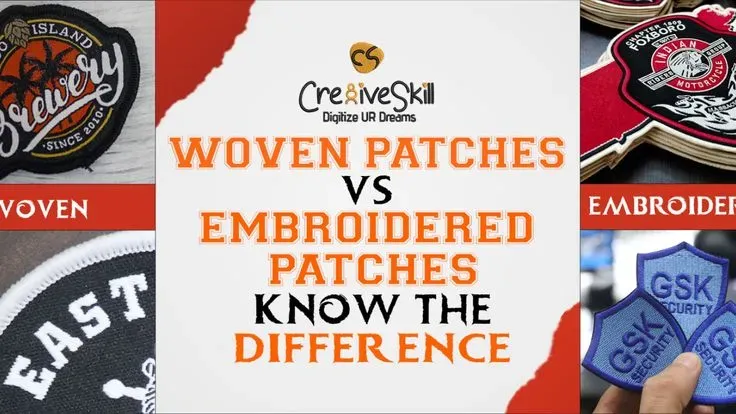
Embroidered, woven, and PVC patches each offer distinct aesthetics and durability profiles for different applications. Your patch production plan should align with the intended wear, wash cycles, and garment type; backing materials affect application and longevity.
Backing options like iron-on, sew-on, or self-adhesive influence ease of use and washability. The selection should balance user experience with production considerations and cost implications.
Lead times and production workflows explained
Understanding lead times helps align expectations with production realities. DIY projects can shorten timelines for tiny batches, but larger or more complex patches often require digitizing, proofs, and test runs before mass production.
Professional patches typically benefit from streamlined workflows, standardized digitizing, and quality control, delivering predictable lead times and scalable patch production for brand campaigns.
Cost comparison: DIY gear vs professional patch production
A rigorous cost comparison weighs upfront equipment and material costs against per-unit pricing, MOQs, and setup fees. DIY may appear cheaper for tiny runs, but cumulative labor, maintenance, and eventual wear on tools can shift the balance.
Professional patch production spreads costs across larger orders and leverages economies of scale, often reducing per-patch costs at higher volumes, while providing color accuracy, consistency, and reliable lead times.
When to outsource: leveraging professional patches for scalable branding
Outsourcing to a patch manufacturer is wise when your strategy calls for consistency, large batches, and advanced formats like woven or PVC. A professional partner can handle design proofs, patch production, packaging, and distribution, ensuring brand fidelity.
For growth-oriented brands, aligning with a professional shop also supports bulk customization, Pantone matching, and flexible backing options, while safeguarding quality across thousands of patches and reducing time to market.
Frequently Asked Questions
DIY vs professional patches: how do they compare on cost for custom patches?
DIY can be cheaper upfront for a very small run, but labor, equipment depreciation, and time add up, increasing the real cost per patch. Professional patch production spreads setup, digitizing, and tooling across MOQs, often delivering a lower per-piece price at scale. Do a full cost comparison across your expected quantity and timeline to decide.
How does patch design quality differ between DIY patches and professional patches?
DIY patches offer full control of the patch design, but digitizing and color matching may be less consistent. Professional patch design support, digitizing, and guidance help optimize stitch density, size, and color accuracy for a more uniform, high-quality result.
What are the lead times for DIY versus professional patch production when creating custom patches?
DIY can yield quicker turnarounds for tiny runs since you manage the process, but time accumulates with learning and setup. Professional patch production provides predictable lead times with proofs and production schedules, though initial proofs can add time to the timeline.
Which approach yields more durable custom patches: DIY vs professional?
Durability hinges on backing, materials, and workmanship. Professional patches typically deliver consistent edge finishing, stitching quality, and reliable backing, while DIY results can vary with skill level and equipment quality.
When should a brand choose professional patch production over DIY for large-scale custom patches?
Choose professional patch production for scalable orders, Pantone color matching, and advanced formats (woven, PVC) across many patches. MOQs and longer lead times are common, but the result is consistent quality and reliable production.
How can you balance cost, quality, and lead times when choosing between DIY and professional patches?
Define your goals, estimate demand, and specify quality requirements. Get quotes for both DIY setups and professional patch production, run a small pilot on one design, and compare outcomes to pick the route that best matches your cost, timeline, and quality targets.
| Aspect | DIY Patches (Key Points) | Professional Patches (Key Points) |
|---|---|---|
| Creative control and iteration | DIY: Full creative control over design, backing, colors, and embroidery density; rapid prototyping for events or concepts. | Professional: Access to design support and digitizing; consistent results, but some control is delegated to the provider; faster scaling while maintaining brand fidelity. |
| Time/lead times | DIY: Fast for small runs; complexity can extend timelines; setup matters. | Professional: Predictable lead times with proofs and mass production; scalable timelines. |
| Cost considerations | DIY: Lower upfront for tiny runs but requires equipment/materials; no MOQs but time has a cost. | Professional: MOQs and setup fees; per-unit costs drop with volume; bulk production economics. |
| Quality and consistency | DIY: Variation in stitch density, color matching, and edges; dependent on skill and experience. | Professional: Consistent quality, color control, edge finishing, and durable results. |
| Materials and formats | DIY: Embroidery-focused with limited backing/formats; experimentation may be slower for non-embroidered styles. | Professional: Access to woven, embroidered, PVC patches; multiple backings and finishing options. |
| MOQs and scale | DIY: No MOQs; ideal for prototypes and very small runs. | Professional: MOQs; advantageous for bulk orders and brand consistency over time. |
| Design/digitizing and support | DIY: You handle design/digitizing or rely on basic tools; learning curve. | Professional: Digitizing services, color advice, and production-ready files. |
| Branding and packaging | DIY: Basic packaging; limited branding options unless you invest. | Professional: Custom packaging, labeling, and coordinated shipping strategies. |
| When to choose | DIY: Small quantities, rapid iteration, hands-on learning, concept testing. | Professional: Scalable product lines, consistency, advanced formats, and branding needs. |
| Decision framework (quick guide) | DIY for pilots/experiments; Professional for main designs and long-term sustainability. | Balance: run a DIY pilot while planning a professional main run to optimize cost, time, and quality. |
Summary
DIY vs professional patches: a practical crossroads for brands and creators. The table above summarizes when to DIY or go professional based on control, cost, lead times, and scalability. In practice, many teams start with a DIY pilot to validate concepts and then shift to professional production for the main line to ensure consistency and efficiency. By weighing the key points—creative control, speed, quality, formats, and MOQs—you can choose the route that best aligns with your goals and market needs.