
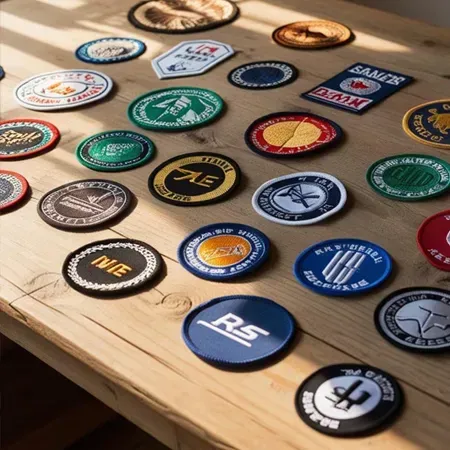
The concept of custom patches as a brand asset reframes how small businesses communicate value to customers, turning a simple emblem into a lasting signal of quality, heritage, and reliability, and inviting conversation about the story behind your logo. These versatile badges travel with customers, adorning uniforms, merchandise, and packaging, and thus extend your presence beyond a single ad campaign into everyday interactions, partnerships, and memorable unboxings, cross-promotions, and community events. Used thoughtfully, they support brand identity by translating digital logos into tangible, tactile touchpoints that reinforce recognition wherever your team shows up, from storefronts to field events, trade shows, and regional gatherings. For startups and small teams, they function as promotional patches that spark curiosity and word-of-mouth while maintaining a practical expense profile and offering flexible options for color, size, backing, and compatibility with existing packaging. In short, patches as a brand asset deliver durable visibility, aligning with your values and helping your audience remember who you are long after a campaign ends.
From a broader marketing view, these emblematic branding touchpoints function as wearable branding assets that extend your visual identity into real-world surfaces. Embroidered, woven, or PVC options give you several textures to convey your logo on apparel, accessories, and packaging, turning products into ambassadors. Used strategically, such branding touchpoints cultivate consistency across channels, nurture customer loyalty, and reinforce brand values without heavy digital ad spend. Think of these as tangible extensions of your brand voice—badge-based branding, emblematic identifiers, or logo patches that sync with the bigger brand narrative.
Building Brand Identity with Patches in Small Business Marketing
In a crowded market, patches provide a tangible brand touchpoint that anchors your visual identity across everyday moments. Custom patches, when aligned with your logo, color palette, and typography, reinforce brand identity on uniforms, merchandise, and packaging. For small business marketing, patches offer a durable and accessible way to extend your brand beyond digital channels and into real-world experiences.
As customers encounter patches on staff outfits, bags, or product packaging, they associate the tactile design with your offerings, building recognition and recall. Patches travel with customers, serving as mobile brand ambassadors that support multi-channel campaigns, seasonal launches, and loyalty programs without the constant reprinting of logos. This strengthened exposure helps win trust and boosts long-term brand equity.
Design Principles for Patches on Branded Apparel
Effective patch design prioritizes simplicity, legibility, and color accuracy to ensure your branding translates well when embroidered or woven onto br and apparel. Choose shapes that fit intended wear locations and ensure the size matches both display and practicality. Selecting the right finish—embroidered for texture, woven for detail, or PVC for bold visuals—affects both aesthetics and durability on branded apparel.
Work with your supplier to translate digital logos into patch art that preserves proportions and contrast. Consistency in thread colors and backing improves readability at a glance and supports uniform branding across uniforms and accessories. By testing proofs and considering how patches wear over time, you can deliver consistent brand visuals across staff and customers.
Custom patches as a brand asset: Maximizing durability, reach, and recall (custom patches as a brand asset)
Custom patches as a brand asset offer a durable, cost-efficient way to keep your logo visible across everyday items. From employee uniforms to product packaging, patches deliver a tactile brand cue that customers can touch, collect, and share. When designed with your brand identity in mind, these patches become long-lived elements that support widespread recognition and trust, even as campaigns come and go.
The reach of patches extends beyond clothing into bags, event signage, and inserts, making them flexible promotional patches for cross-channel marketing. Limited-edition releases or partner collaborations can drive excitement and repeat engagement, turning patches into collectible items that reinforce loyalty and advocacy while staying affordable for small businesses.
Production Strategy: MOQs, Proofing, and Timelines
Understanding MOQs, proofs, and lead times helps you plan budgets and avoid delays. Start with scalable logo files, request patch-specific proofs, and confirm size, finish, and backing before committing to production. Negotiating lower MOQs or staged releases can make patches accessible for small businesses testing designs and market fit.
Request physical samples to validate embroidery quality, color accuracy, and backing performance. Compare supplier timelines for proofs, pre-production samples, and final runs to align with product launches or marketing calendars. Weigh finish options and quantities against potential ROI to ensure patches deliver value without tying up capital.
Maximizing Impact Across Channels: Uniforms, Merchandise, and Packaging
Patches should function as a cohesive element in a broader branding program, extending your brand identity into uniforms, hats, bags, and packaging. Using consistent shapes, colors, and branding details across staff wear and merchandise reinforces brand recognition and supports small business marketing goals. Patches on packaging or inserts provide an elevated unboxing experience that reinforces your visual identity.
Cross-channel use increases touchpoints with customers and partners, turning patches into promotional patches that boost engagement. Co-branded patches with partners or exclusive patches for loyalty programs offer practical ways to extend reach, drive co-marketing, and deepen relationships while keeping production scalable for small budgets.
Measuring Success: ROI and Brand Loyalty from Patch Programs
Track metrics that reflect brand recall, engagement, and loyalty. Surveys, focus groups, or digital analytics can reveal whether customers recognize your logo colors and typography after exposure to patches. Monitor merchandise demand and social sharing to gauge how patches influence perceived value and interest in your products.
Internal impacts matter too: patches can boost employee morale and retention by reinforcing pride in the brand. Use data from patch campaigns to refine designs, shapes, finishes, and rollout plans, ensuring each new batch compounds brand equity and improves ROI over the asset’s lifespan.
Frequently Asked Questions
How do custom patches as a brand asset enhance brand identity on branded apparel?
Custom patches translate your logo into a tactile badge on branded apparel, reinforcing brand identity through consistent colors, shapes, and typography on uniforms, hats, and bags. Durable and visible, patches turn everyday items into mobile branding that travels with customers.
Why are custom patches a cost-effective option for small business marketing?
Patches offer long-term visibility at a lower per-impression cost. They work in small batches to test designs and scale with your budget, reducing reprint costs and extending your brand across uniforms, merchandise, and packaging for years. This supports small business marketing goals without breaking the bank.
What design considerations help patches reinforce brand identity across touchpoints?
Prioritize simplicity and legibility, accurate brand colors, appropriate shape and size for the wear location, and choose a finish (embroidered, woven, or PVC) and backing that align with your brand identity and budget.
How do you choose a patch partner for promotional patches and branded apparel?
Select a supplier with proven design reproduction across finishes and backings for both promotional patches and branded apparel, clear quality controls, transparent MOQs and lead times, and accessible proofs and samples. Consider sustainability and ethical practices as part of your brand identity.
How can patches be integrated into packaging, merchandise, and events to maximize impact?
Use patches on packaging elements, included inserts, and co-branded or limited-edition patches for events and merchandise. Encourage social sharing and employee uniforms to extend reach, reinforcing small business marketing across channels.
How can you measure patch impact on brand recall and loyalty in small business marketing?
Track brand recall through surveys, monitor engagement with patch-branded merchandise, and analyze loyalty program uptake and social content featuring your patches to assess ROI and long-term brand equity.
| Topic | Key Points |
|---|---|
| What are custom patches? | |
| Why patches as a brand asset |
|
| Embedding brand identity with patches |
|
| Designing patches that deliver results |
|
| Production and logistics: turning ideas into wearable assets |
|
| Applications that maximize impact |
|
| Finding the right patch partner |
|
| Integrating patches into a broader marketing strategy |
|
| Measuring impact and adapting |
|
| Getting started with patches for your small business |
|