
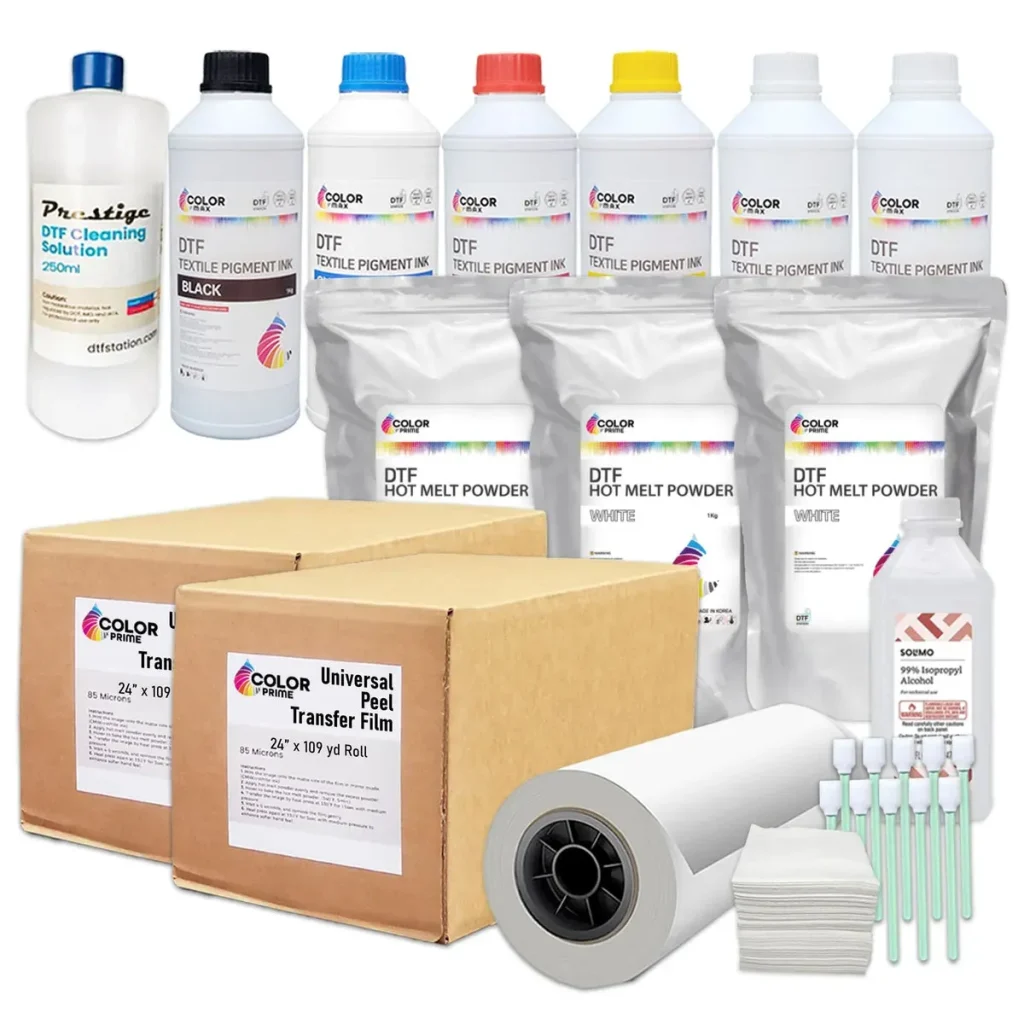
DTF supplies form the foundation of professional, durable, and vibrant transfers, guiding you toward consistent, high-quality results that meet brand standards and customer expectations. A typical kit includes DTF film, adhesive powder, and a compatible heat press, all chosen to maximize color accuracy, ease of use, and long-term performance. Choosing reliable components helps ensure strong adhesion, crisp details, and faster production with fewer reworks, reducing waste and boosting efficiency across diverse fabrics. With the right combination of components, you can achieve consistent color fidelity and reliable transfers, delivering predictable results across different garment types and print runs. Careful selection of modules ensures a scalable, cost-efficient workflow that keeps customers satisfied, supports growth, and protects your reputation in a competitive market.
DTF Supplies: Building a Complete Kit for Vivid, Durable Transfers
A solid DTF kit begins with a cohesive set of consumables and equipment that together form the backbone of professional, long-lasting results. When you assemble the core elements—DTF film, DTF inks, adhesive powder, and a compatible heat-press workflow—you create a stable platform for consistent transfers across different fabrics. This is where the phrase DTF supplies truly applies, as the quality and compatibility of each item determine how vividly and durably your designs print and adhere.
Investing in a complete DTF supplies kit pays off through reduced waste, fewer reprints, and stronger wash durability. With reliable components, you can predict color reproduction, dryness, and the adhesion strength between ink and fabric, leading to fewer complaints about cracking, peeling, or fading after multiple washes. In short, the right supplies set the foundation for crisp edges, vibrant colors, and durable transfers that stand up to real-world wear.
Evaluating DTF Film for Sharp, Bright Prints
DTF film is more than a passive carrier; its whiteness, haze level, and thickness directly impact image clarity and color brightness. When assessing films, look for high whiteness and low haze to provide a clean canvas for your designs, and consider a thickness in the range that matches your typical workflow. The film’s dimensional stability also matters, since warping can affect edge definition and overall vibrancy in your DTF transfers.
Release properties are critical: a film that releases cleanly reduces ghosting and residue on garments, helping you achieve sharp details and smooth gradients. Compatibility with your chosen ink system should guide your selection, as some DTF films are engineered for specific chemistries. Testing edge definition and color accuracy on representative fabrics will reveal how well the film supports vivid transfers, even on complex designs.
DTF Inks: Color Quality and Long-Lasting Performance
Inks are the heartbeat of any DTF project, dictating color gamut, coverage, and wash durability. The right DTF inks deliver rich, accurate colors that reproduce your artwork with high fidelity, especially when used with compatible film and adhesive powders. A broad color range helps you tackle complex designs, while stable formulations minimize bleeding or feathering during curing and transfer.
Beyond color, ink stability and drying behavior influence print quality and edge fidelity. Inks that cure evenly and maintain sharp lines help ensure that designs stay vibrant after multiple washes. When paired with a reliable film and powder system, high-quality inks contribute to durable transfers that resist fading and cracking while preserving the integrity of fine details.
Adhesive Powder and Curing: Securing Transfer Durability
Adhesive powder is the unseen workhorse of a strong DTF transfer. Consistent particle size and even coating promote uniform adhesion, minimize heat marks, and reduce edge halos that can mar the final appearance. The powder acts as a bridge between the printed design and the fabric, so its behavior during curing directly affects durability and wash-fastness.
Curing compatibility—proper heat, time, and pressure—ensures the powder activates correctly for a durable bond. If curing is off, you may see premature peeling, reduced wash resistance, or a feel that’s not as smooth to the touch. When the adhesive system, film, and inks are matched, you can expect robust transfers with strong hand feel and reliable performance across many laundering cycles.
Practical Testing of DTF Supplies Before a Big Run
Before committing to a large order, run controlled tests across a range of fabrics (polyester, cotton blends, and natural cotton) to assess color vibrancy and adhesion. Small test prints help you observe how your DTF transfers behave under real-world use, including how well whites render and how colors hold up after washing.
Conduct wash tests using a standard protocol to simulate typical wear and laundering, then compare edge quality, texture, and overall durability. Assess production efficiency by tracking feed rates, curing times, and any maintenance needs. Finally, verify vendor reliability and after-sales support, since responsive guidance and replacements can save time and prevent costly downtime in busy production runs.
Cost, Value, and Supplier Selection for Consistent Results
Quality DTF supplies often require higher upfront costs, but they typically reduce waste, rework, and returns over the long term. When evaluating value, look beyond price per sheet to total cost of ownership, including ink usage, film yield, and powder consumption. Durable transfers result from a well-balanced, compatible set of components rather than the cheapest option.
Consider the reliability of brands, the clarity of compatibility information, and the availability of technical support. Running pilot tests with a few reputable suppliers lets you compare performance across typical job types and fabrics. The right partners can provide troubleshooting resources, timely replacements, and ongoing guidance—essential for maintaining vivid, durable transfers as your production scales.
Frequently Asked Questions
What are the essential DTF supplies I need for durable DTF transfers?
Essential DTF supplies include a compatible printer, DTF film, DTF inks, adhesive powder, and a reliable heat press with a proper curing workflow. Choose high-quality DTF film with good whiteness and low haze, and inks with strong wash durability to support vivid colors. A consistent adhesive powder and correct curing settings finalize transfer durability and edge definition.
How do I choose DTF film for vivid transfers?
When selecting DTF film for vivid transfers, look for high whiteness and low haze, which boost color brightness and true blacks. Consider thickness (typically 75–150 microns) and release properties to minimize ghosting and residue. Ensure the film is compatible with your DTF inks to maintain color accuracy and sharp edges.
What role do DTF inks play in color quality and wash durability?
DTF inks determine color gamut, stability, and wash durability. Choose inks that deliver consistent drying on film, minimal bleeding, and strong resistance to fading after washing. Use inks that are formulated for your printer and work well with your film and adhesive powder to maximize durability.
Why is adhesive powder important in DTF transfers and how should I select it?
Adhesive powder governs coating uniformity, curing success, and wash-fastness. Look for powders with uniform particle size for even coverage and easy removal from non-image areas. Ensure the powder cures properly under your heat press settings to provide strong adhesion and durable transfers.
What tests should I run to evaluate DTF supplies before a big run?
Run test prints on multiple fabrics (polyester, cotton blends, cotton) to gauge color vibrancy and adhesion. Conduct wash tests with a standard protocol to verify durability and edge quality. Also assess production efficiency and check vendor support for troubleshooting and replacements.
How can I balance cost and quality when buying DTF supplies for vivid and durable transfers?
Balance cost and quality by evaluating total cost of ownership—ink usage, film yield, and powder consumption—rather than price per sheet alone. Prioritize compatibility with your printer and workflow, and test a few reputable brands to ensure reliable, vivid, and durable transfers. Strong supplier support can reduce downtime and protect long-term value.
| Aspect | Key Points |
|---|---|
| DTF Supplies Overview | Direct-to-film supplies include DTF film, DTF inks, adhesive powder, a compatible printer, curing workflow, and other consumables; these components influence color reproduction, adhesion strength, and wash durability. |
| DTF Film | High whiteness and low haze are crucial; typical thickness 75–150 microns; good release properties; affects color vibrancy, edge definition, and powder adhesion; ensure ink compatibility; reduces ghosting. |
| DTF Inks | Color gamut, stability, and wash durability are key; ink formulations include water-based, resin-based, or pigment; choose based on vibrancy, fabric compatibility, and durability; ensure printer compatibility. |
| Adhesive Powder | Uniform particle size and consistent coating; easy activation and clean transfer; curing compatibility; improves wash-fastness and edge definition; influences final adhesion strength. |
| Printer & Curing Workflow | A printer capable of handling DTF inks and a reliable curing/press process are essential for durable results. |
| Other Consumables | Cleaning supplies, liners, and backup sheets affect efficiency and consistency in production runs. |
| Why Quality Matters | Quality supplies improve color reproduction, dryness, and bond strength; cheap or incompatible components can cause pale colors, ghosting, flaking, or poor wash-fastness; investing in quality reduces waste and yields consistent results. |
| Film Evaluation Criteria | Look for high whiteness and low haze; thickness around 75–150 microns; good release properties; check compatibility with your ink set; test edge definition and color accuracy. |
| Inks & Color Quality | Seek wide color gamut, stable drying with minimal bleeding, and wash durability; verify printer compatibility; choose ink chemistry aligned with your workflow. |
| Adhesive Powder & Curing | Powder uniformity and coating ease; curing under press settings; wash performance; ensure powder-system works with film and ink for durable results. |
| Testing & Validation | Test prints on multiple fabrics; perform wash tests; assess edge quality; monitor production efficiency and support resources. |
| Cost vs Value | Consider total cost of ownership beyond price per sheet; durability and reduced waste; test multiple brands before large orders. |
| Checklist | Film: whiteness, low haze, suitable thickness; Inks: broad color gamut, stability, wash-fastness; Powder: even coating; Printer compatibility; Storage; Support. |
Summary
DTF supplies play a pivotal role in achieving durable, vibrant transfers that customers love. By choosing reliable DTF film, inks, and adhesive powder—and pairing them with a compatible printer and a proven curing workflow—you can forecast print quality, adhesion strength, and wash durability across fabrics. Balance cost with value by considering total cost of ownership, compatibility, and supplier support, and test a few reputable brands before committing to a large order. With the right DTF supplies in your kit, you’ll enjoy consistent results, reduced waste, and transfers that look great wash after wash.