
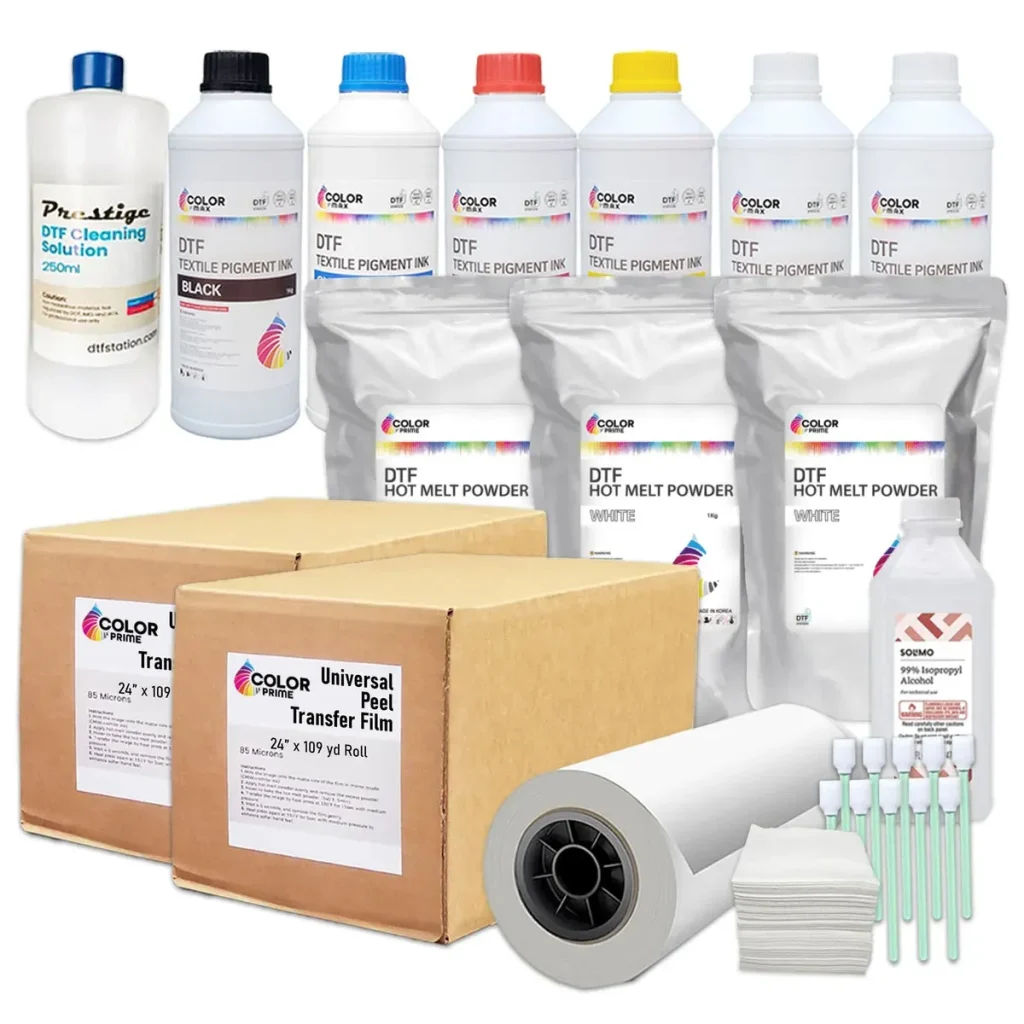
DTF supplies open the door to vibrant, durable transfers for textiles, boosting your ability to decorate apparel, home goods, and accessories. Choosing the right DTF printing supplies means pairing essential components like DTF film and DTF adhesive powder with compatible inks and a DTF printer. The DTF film’s consistency and release behavior, along with the quality of DTF adhesive powder, determine how cleanly images transfer during heat pressing. DTF ink contributes color vibrancy and wash-fast durability when used with a reliable DTF printer and the right RIP software. This beginner-friendly guide helps you evaluate core DTF supplies, avoid common pitfalls, and set up a workflow that fits your budget and design goals.
Viewed through a broader lens, this modern film-to-fabric transfer approach sits among digital textile printing options, using a clear transfer film, specialized powders, and textile inks. The goal is to align compatible media, color management, and a reliable heat press to deliver durable results. As you compare options, focus on the same core ideas—quality film, consistent powder, vibrant inks, and a dependable printer—without getting overwhelmed by gadgetry.
DTF Supplies: Building Your Beginner’s Toolkit for Consistent Results
Starting with a solid toolkit is the foundation of successful DTF transfers. The core DTF supplies you’ll rely on include a DTF printer, DTF film, adhesive powder, DTF inks, and a reliable heat press, along with supporting gear like silicone sheets and lint-free cloths. Getting these items to work well together reduces wasted prints and improves color accuracy from the first project. In practice, you don’t need every gadget on the market—focus on dependable, compatible components that form a repeatable workflow.
DTF supplies set the baseline for outcomes, so choose items that align with your budget and design goals. When shopping, look for starter bundles and community-tested recommendations to ensure compatibility across film, powder, inks, and printers. Together, these elements determine color fidelity, wash durability, and ease of use as you grow from practice runs to small runs. A thoughtful starter kit helps you avoid common early missteps and keeps learning costs predictable.
DTF Film and Adhesive Powder: How to Choose for Consistent Transfers
DTF film is the visible backbone of the transfer. Seek films with uniform thickness, a receptive coating, and a consistent liner that matches your printer and ink set. The right DTF film releases cleanly from the liner after curing and transfers evenly onto a range of fabrics. Consistency matters because edge-to-edge deposition and predictable adhesion are what prevent mottling and hot spots in your designs.
Adhesive powder is the second critical touchpoint. A well-coated powder with even distribution ensures the image bonds to fabrics without cracking or peeling after multiple washes. Look for powders that flow smoothly, cling evenly, and resist clumping. The balance between film and powder quality directly affects wash-fastness, color clarity, and the overall perception of durability in your finished transfers.
DTF Inks and DTF Printers: Color, Compatibility, and Longevity
DTF ink quality and printer compatibility shape vibrancy and long-term performance. Use inks designed for textile transfers that resist fading and cracking after repeated washes, and confirm they are compatible with your chosen DTF film. The printer you select should offer reliable print quality, straightforward maintenance, and a track record of consistent color output. When inks, film, and printer are well-aligned, you’ll notice cleaner gradients, solid fills, and more accurate color reproduction.
Beyond the hardware, consider the RIP software and color-management workflow. A capable RIP helps manage ICC profiles, color spaces, and layout control, turning digital designs into predictable prints. Investing time to learn basic color management saves you from flat or oversaturated results and makes your DTF printing supplies more effective across different designs and fabrics.
RIP Software and Color Management: Turning Data into Durable Transfers
RIP software is the bridge between your design software and the printer. It provides precise control over color profiles, halftone settings, and printing layouts, which is essential for consistent results when using DTF film and adhesives. With good RIP setup, you can translate on-screen color intent into real-world transfers that match your proofs and client expectations.
Effective color management requires practical steps, such as calibrating monitors, building ICC profiles for your fabrics, and testing prints on representative swatches. By iterating with a small set of fabrics and design types, you’ll develop repeatable color behavior. Over time, the combination of RIP settings, proper ICC profiles, and your DTF film/ink/printer pairing yields professional, durable transfers.
Heat Press Best Practices: Achieving Even Transfer and Durability
Heat pressing is where everything comes together. Achieving uniform temperature and pressure across the transfer area is crucial for consistent results. Follow film- and powder-specific guidelines for temperature, time, and pressure, and verify platen temperature stability with a thermometer. Proper, even pressing reduces wrinkling, edge curling, and color shifts that can undermine the best DTF supplies.
Consider pre- and post-heat steps and choose appropriate accessories, such as silicone sheets and lint-free cloths, to protect the transfer and fabric. Different fabrics—cotton, blends, and synthetics—may require tweaks in press duration or heat level. Maintaining a careful, repeatable routine will help you maximize the durability and wash-fastness of your DTF prints.
Smart Buying and Testing: Bundles, Budgeting, and Field Tests for DTF
Smart buying starts with understanding how DTF supplies work together. Look for bundles that include a compatible printer, film, powder, and a few substrates so you can compare outcomes without risking incompatible components. Budget wisely by prioritizing core items—DTF printer scalability, film, adhesive powder, and inks—before expanding with accessories like gloves and release papers.
Testing is the learning engine for beginners. Develop a simple routine that prints a design with solid fills, gradients, and small text on a representative fabric. Cure and press under recommended conditions, then wash and inspect for adhesion, color integrity, and durability. Document issues and iterate—adjust settings, switch films or powders if needed, and build confidence that your DTF supplies will deliver consistent, professional results.
Frequently Asked Questions
What are the essential DTF supplies I should start with, and how do DTF film and DTF adhesive powder fit into a beginner’s DTF printing supplies kit?
Core DTF printing supplies include DTF film, DTF adhesive powder, DTF ink, a DTF printer, a heat press, and supporting gear like silicone sheets and lint-free cloths. For beginners, choose film with consistent thickness and a powder that coats evenly; ensure your inks are compatible with the film and printer to enable reliable transfers.
How can I evaluate DTF film and DTF adhesive powder to ensure reliable, wash-fast transfers?
Look for uniform film thickness, smooth coating, and good liner release when evaluating DTF film. For DTF adhesive powder, check flow, even coating, and wash-fastness. Always review supplier specs and user reviews for durability after multiple washes.
Should I buy a dedicated DTF printer, or can I use a standard printer for DTF printing supplies?
A dedicated DTF printer is typically more reliable and easier to maintain within the DTF printing supplies workflow, though some setups adapt pigment-based printers. Consider print quality, ongoing maintenance, and community support when choosing a DTF printer.
What should I know about DTF ink quality to achieve vibrant colors and durable prints on fabrics?
DTF ink quality directly affects color vibrancy and durability. Ensure inks are designed for textile transfers, compatible with your DTF film and printer, and resistant to fading after washes.
How important is heat pressing and curing when using DTF film and DTF adhesive powder in your workflow?
Heat pressing and curing are critical for transfer durability. Follow the recommended temperature and time for your film and adhesive powder, apply even pressure with a calibrated heat press, and consider pre- or post-heat steps if advised by the supplier.
What is a practical starter budget or bundle for DTF supplies, including film, adhesive powder, inks, and a printer?
A practical starter kit should include one DTF film option, one DTF adhesive powder, one ink set compatible with your printer, and a reliable DTF printer plus a heat press. Plan for testing, bundles, and education, and expand gradually as you validate results.
| Aspect | What this means | Practical tips |
|---|---|---|
| Introduction | DTF printing enables versatile decoration on textiles; choosing the right DTF supplies is the first big decision; this guide explains what supplies you need, how to evaluate them, and practical steps to set up your first DTF workflow. | Define your budget, start with essential core supplies, and plan for scalable growth. |
| What are DTF supplies and why they matter | DTF supplies include the printer, DTF film, adhesive powder, two-part curing steps, DTF inks or pigment inks, and supportive gear like a heat press, silicone sheets, and lint-free cloths. The quality of each component affects color fidelity, durability, washability, and ease of use. As a beginner, you don’t need every gadget on the market, but you do need the core supplies that work well together and produce repeatable results. | Start with a core, compatible set that delivers reliable, repeatable results; avoid wasted money on unproven add-ons. |
| Core DTF supplies you’ll likely start with | – DTF film: Clear, specialty film with a receptive coating; – Adhesive powder: Back-coat for transfer adhesion; – DTF inks or pigment inks: Colorants for the film; – DTF printer: Printer compatible with the DTF workflow; – RIP software and color management: Manage color profiles; – Heat press and accessories: Reliable press, silicone sheets, parchment, heat-resistant tape; – Cleaning and handling gear: Gloves, lint-free cloths, brushes. | Focus on a core, widely supported toolset that works well together. |
| How to evaluate DTF film and adhesive powder | – Film consistency: Uniform thickness and a smooth coating; – Release and curing behavior: Clean release from liner; – Powder coating quality: Even flow and uniform adhesion; – Wash-fastness: Durability under multiple washes. | Check supplier specs, read user reviews, and run small tests to compare options. |
| Choosing the right inks and printer setup | – Ink compatibility: Ink designed for textile transfers and compatible with your film; – Printer reliability: Models with good support and replaceable parts; – RIP and color control: Color management capabilities and profiles. | Invest time to learn basic color management and pick a setup with strong community support. |
| The importance of heat pressing and curing | – Temperature and time: Follow film and powder guidelines; – Pressure uniformity: Even pressure; – Pre- and post-heat steps: Optional steps to improve adhesion. | Calibrate your press and follow manufacturer guidance for best results. |
| Footprint and budget planning for beginners | – Start with a mid-range printer; – A few batches of compatible film and adhesive powder; – A heat press you can grow with; – Consider space, power, and ventilation. | Plan a starter kit with one film, one adhesive powder, and one ink set plus a beginner RIP. |
| Practical steps to buy wisely | 1) Define your end products and fabric types; 2) Start with a modest kit; 3) Check compatibility; 4) Read real-world reviews and look for bundles; 5) Invest in education. | Use a simple decision framework and test on scrap fabric first. |
| Quality control, testing, and iterating | Build a small testing routine: design with a mix of solid fills and small text; print on a representative fabric swatch; cure as recommended and press at the correct temperature and time; wash and inspect for color bleed, cracking, or adhesion loss; note issues and adjust. | Document results and refine your process. |
| Common beginner pitfalls and how to avoid them | – Poor alignment: Use jigs and registration marks; – Uneven printing or coating: Maintain printer and ensure powder is evenly milled; – Inconsistent wash durability: Verify wash-fastness and rehearse curing; – Over-reliance on cheap components: Balance cost with reliability and support. | Use a proper jig, maintain equipment, and choose reliable components. |
| Where to buy and budgeting tips | Look for starter bundles with printer, film, powder, and substrates; compare bundles to simplify setup; budget core supplies first (film, adhesive powder, inks, printer) and add accessories as you grow. | Choose reputable suppliers and read data sheets and reviews. |
| Conclusion | Choosing the right DTF supplies is foundational to a successful, beginner-friendly DTF journey. By understanding the role of each component—from DTF film and adhesive powder to inks and heat press settings—you can assemble a durable, repeatable workflow that yields vibrant, long-lasting transfers. Start with a sensible kit, learn your color management basics, and test with representative fabrics. With time, your grasp of DTF supplies will grow, and your results will become more consistent and professional, turning your first prints into a sustainable, creative endeavor. | Plan for steady learning and continuous improvement; invest in education and community support. |
Summary
DTF supplies form the backbone of a successful, beginner-friendly journey into direct-to-film printing. By understanding how each component—DTF film, adhesive powder, inks, a compatible printer, RIP software, and a heat press—contributes to color fidelity, durability, and wash-fastness, you can build a repeatable, budget-conscious workflow. Start with a sensible starter kit, learn basic color management, and test on representative fabrics. Over time, your ability to predict results will improve, waste will drop, and your DTF supplies choices will lead to more consistent, professional transfers.