
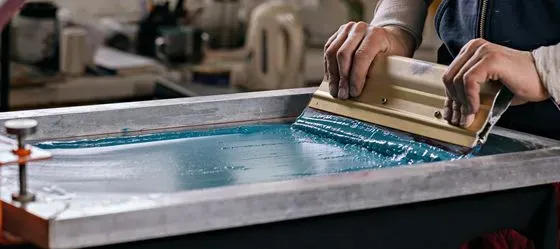
Screen printing on different surfaces opens up a world of creative possibilities for clothing, signage, and home décor, letting you mix textures and colors in fresh, durable ways. From screen printing on fabric to glass, the core process stays the same while inks, emulsions, and curing methods flex to suit each substrate. Understanding substrate interactions helps you map out the right ink systems and drying schedules, so you can achieve strong adhesion, color density, and long wear across materials. This introductory guide highlights practical tips, from achieving clean registrations to anticipating substrate quirks, so beginners can build confidence while seasoned printers expand into new substrates. As you experiment with different materials, you’ll learn how small adjustments to prep, squeegee angles, and cure cycles yield noticeably better, more durable results.
In more technical terms, this practice enters the realm of substrate-aware printing, where the mesh, emulsion, and ink must harmonize with each material—textiles, glass, wood, or plastic. People often refer to textile printing, glass decoration, and signage production as flavors of the same craft, emphasizing surface energy, adhesion, and curing behavior. Thinking in terms of material compatibility, pre-treatments, and finish durability helps you map a workflow that works across mediums while preserving design integrity.
Screen printing on different surfaces: Substrate Basics and Best Practices
Understanding Screen printing on different surfaces starts with substrate science: porosity, surface energy, texture, and moisture content all influence ink adhesion and color density. While the core screen printing process remains the same, you’ll adjust ink choices, emulsions, exposure times, and curing methods to suit each material. Mastery comes from recognizing how fabric, glass, wood, metal, and plastic respond differently to ink flow, drying, and abrasion, and tailoring your workflow accordingly.
Plan your workflow for diverse substrates by running small test batches, calibrating registration, and logging cure temperatures. This approach applies across screen printing on different surfaces, whether you’re layering on fabric or working with glass, wood, metal, or plastics. To start strong, follow DIY screen printing tips such as reliable stencil production, consistent squeegee pressure, and maintaining appropriate off-contact distances to keep edges sharp.
Fabric Focus: Screen Printing on Fabric for Bold, Durable Prints
Fabric printing benefits from ink choices like plastisol and water-based inks. Plastisol inks deliver opaque, vibrant color on dark fabrics and cure with heat around 320–330°F (160–166°C). Water-based inks offer a softer hand and are more eco-friendly, but require careful curing and post-print rinsing to avoid a stiff feel. Understanding fabric fibers (cotton, polyester blends, performance fabrics) helps you choose the right ink system and curing window.
Pretreatment and base coatings for light fabrics ensure full color density, and proper curing preserves wash durability. For multi-color work, precise registration, consistent squeegee pressure, and controlled off-contact distances are essential to prevent color bleed and edge fuzz. By refining these parameters, you can achieve durable, vibrant fabric prints that survive repeated washes and wear.
Glass and Ceramic Surfaces: Ink Systems and Surface Prep
Glass presents a non-porous, smooth challenge where ink adhesion hinges on selecting the right ink system—ceramic inks or UV-curable options designed to withstand handling, washing, and occasional heat. Understanding substrate compatibility is key to achieving durable, legible designs on glass and ceramic surfaces.
Surface prep is critical: clean with isopropyl alcohol to remove oils, ensure the surface dries completely, and consider back-coating or white underbases on clear glass to improve opacity. Depending on the ink, you may use a kiln firing or UV curing to set the print. With careful ink selection and curing, glass and ceramic prints can stay vibrant through daily use.
Wood, Metal, and Plastic: Substrate-Specific Considerations
Wood requires attention to grain, moisture content, and surface sealing before printing. A clear coat or sealant can stabilize the surface, while ink choices include water-based or solvent-based options depending on the desired finish and durability. Wood substrates may need dot-gain control and adjusted cure settings to prevent warping or uneven density.
Metal surfaces generally require thorough degreasing and sometimes a primer to improve adhesion for plastisol or UV-curable inks. Curing temperature and duration depend on the ink system, and you should test for corrosion resistance in exposed environments. Plastics (PET, acrylic, etc.) can be challenging due to surface energy and potential warping, so adhesion promoters or specialty inks, along with primers or topcoats, are often necessary for outdoor durability.
Technique and Registration Across Surfaces: Alignment, Open Time, and Drying
Achieving accurate color and crisp edges across substrates demands refined technique: precise registration, platen alignment, consistent squeegee pressure, and careful off-contact control. Non-porous surfaces may require longer open times and slower ink drying, so manage open time and scoop-off to keep density and edge sharp.
Masking with film positives, flexible stencils, and curved substrates (like bottles or curved glass) require adaptable approaches to accommodate curvature. Drying and curing schedules vary by ink and substrate, so always follow the manufacturer’s recommendations and perform a test cure on a sample to validate color strength and adhesion.
Troubleshooting and Eco-Friendly Trends in Screen Printing: DIY Tips and Best Practices
Common issues include poor adhesion on challenging surfaces, ink bleeding on textiles, color fading on glass, and warping on plastics. Solutions involve adjusting surface prep, tweaking off-contact and platen setup, choosing the appropriate ink system, and validating cure times with test plots. Keeping meticulous records helps you dial in the right parameters for consistent results.
Sustainability and innovation drive the industry toward water-based inks, reduced solvent emissions, and more eco-friendly processes. Practices such as reclaimed water use, efficient cleaning protocols, and waste-minimization strategies lower environmental impact while maintaining print quality. Incorporating DIY screen printing tips—like cost-conscious material testing, batch planning, and iterative trials—can help you scale responsibly and sustainably.
Frequently Asked Questions
How does screen printing on different surfaces influence ink selection and curing methods?
Different substrates require specific inks and cure profiles. For fabric, plastisol inks cure with heat; for glass, ceramic or UV-curable inks are common and may need firing or UV curing. Always pilot-test cure on a sample to verify adhesion and durability.
What are essential DIY screen printing tips for beginners when working with screen printing on fabric and screen printing on glass?
Prepare clean surfaces: prewash fabric and use appropriate inks with proper curing; for glass, clean with isopropyl alcohol and pick durable inks (ceramic or UV) with correct curing. Maintain accurate registration, steady squeegee pressure, and practice on scrap pieces before production.
Which screen printing techniques help achieve color density and edge sharpness across different surfaces?
Use precise registration, consistent off-contact, and controlled squeegee pressure. On non-porous surfaces, manage open time and consider back-coats or multiple passes to boost density and edge clarity, then cure per ink specifications.
What are common durability challenges when screen printing on glass, wood, or plastic, and how can you prevent them?
Adhesion, cracking, or fading are common. Prevent with proper surface prep (degreasing, cleaning), adhesion promoters or primers when needed, compatible inks, and correct curing. Run tests under expected use conditions to confirm durability.
How do you plan multi-color designs for screen printing on fabric to maintain sharp edges and color consistency across surfaces?
Prepare accurate color separations and registration marks, keep consistent ink viscosity, and apply uniform squeegee pressure. Use underbases for dark fabrics and verify alignment on representative substrates to preserve edge sharpness.
What sustainable practices and DIY tips help reduce waste when screen printing on different surfaces?
Choose eco-friendly inks (water-based or dual-cure), minimize solvent use, reclaim wash water, and reuse screens where possible. Optimize cure schedules and cleanup to avoid waste, and test on scraps before committing to production.
| Aspect | Key Points |
|---|---|
| Fabric and textiles | Ink types (plastisol, water-based); pretreatment; curing temps; wash durability; registration/edge sharpness; color density and edge sharpness across multi-color prints. |
| Glass and ceramic surfaces | Surface prep (clean with isopropyl alcohol); ink choices (ceramic or UV-curable); curing methods (kiln firing or UV); opacity considerations on clear glass. |
| Wood, metal, and plastic | Wood: grain/moisture, sealing and pre-treatment; metal: surface prep, potential primers, adhesion; plastics: surface energy, adhesion promoters, primers; durability considerations. |
| Techniques and registration | Registration accuracy for multi-color work; non-porous surface ink open time; masking/film strategies for curves; consistent drying and curing. |
| Troubleshooting | Common issues: poor adhesion, ink bleed, fading, warping; remedies include surface prep, ink selection, adjusted cure schedules, and testing. |
| Sustainability and future trends | Eco-friendly inks (water-based), dual-cure systems, reduced solvents, waste minimization, and routine testing to balance performance with environmental impact. |
Summary
Screen printing on different surfaces is a versatile craft that unlocks countless product possibilities—from apparel and signage to glassware and décor. By understanding how each substrate interacts with inks, emulsions, and curing methods, you can achieve durable, vibrant results across fabrics, glass, wood, metal, and plastics. Proper surface preparation, ink selection, curing, and registration are critical for consistency and longevity. As you expand into new substrates, apply careful testing and iteration to refine your workflow and maintain quality while exploring eco-friendly ink options and sustainable practices. This cross-material approach helps both beginners and seasoned printers scale projects with confidence while preserving the brand’s visual impact and durability.